14 April 2026
How to Check Trailer Wheel Alignment
Proper wheel alignment is crucial for safe trailer towing, fuel efficiency, and extending tyre life. Misaligned wheels can cause uneven tyre wear, poor handling, and increased wear on suspension components. Whether you're towing a caravan, boat, or utility trailer, understanding how to check alignment will help you identify problems early.
Why Wheel Alignment Matters
When trailer wheels are misaligned, they don't track straight behind your towing vehicle. This creates extra resistance, puts strain on tyres, and can make your trailer difficult to control, especially in crosswinds or at higher speeds. Poor alignment also increases fuel consumption and accelerates tyre degradation, costing you money in the long run.
Visual Inspection
Start with a basic visual check. Park your trailer on level ground and look at it from different angles. Stand at the front and back of the trailer, and check if the wheels appear to sit at the same angle. Look down the length of the trailer from both sides – the wheels should form a straight line parallel to the trailer's frame.
Examine your tyres for uneven wear patterns. If the inner or outer edges are more worn than the centre, this indicates misalignment. Wear on both outer edges suggests toe-out, while wear on inner edges suggests toe-in.
The String Line Method
One effective DIY method uses string or chalk. You'll need:
- String or chalk
- Measuring tape
- Level ground
Park the trailer straight on flat, level ground. Tie a string tightly along the length of the trailer, running from the front to the back, roughly parallel to the frame at wheel height. Measure the distance from the string to the inside of the front wheel on both sides, then do the same at the rear wheels.
If measurements are equal front and rear, your alignment is reasonable. If the rear wheels are closer to the string (toe-in) or further away (toe-out), you have misalignment that needs adjustment.
The Laser Alignment Tool Method
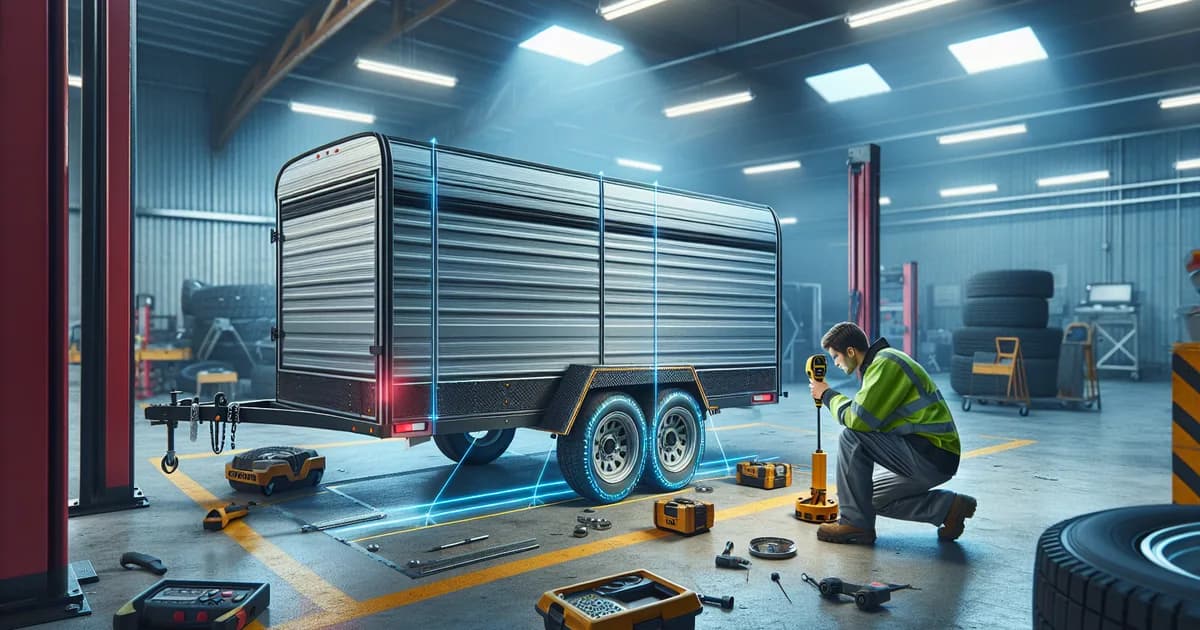
For more precise results, consider hiring or purchasing a laser alignment tool. These are increasingly affordable and provide accurate measurements. The trailer is positioned on level ground, and the laser tool attaches to the wheel to measure exact angles. This method is particularly useful if you're dealing with older trailers or those that have been in accidents.
Checking Camber and Caster
While toe alignment is what most DIYers can assess, professional shops also check camber (vertical wheel angle) and caster (steering axis angle). These require specialised equipment. If your trailer pulls to one side or feels unstable, these angles may be off.
Common Alignment Issues
Toe-in occurs when the front of the wheels angles inward. This can happen from hitting potholes or curbs.
Toe-out is when wheels angle outward. This is less common but equally problematic.
Bent axles from impact damage cannot be corrected through alignment adjustment alone – the axle needs replacement.
When to Seek Professional Help
While basic checks are manageable, correcting alignment often requires professional equipment and expertise. If you notice:
- Significant tyre wear patterns
- Trailer pulling to one side
- Steering instability
- Recent impact or accident damage
contact a qualified trailer repair specialist. Many Australian trailer repair shops have modern alignment equipment and can make precise adjustments.
Preventative Maintenance
Check alignment annually or before long trips. Avoid hitting potholes and kerbs, which are common causes of misalignment. Regular visual tyre inspections help catch problems early.
Proper wheel alignment is fundamental to trailer safety and performance. Starting with these basic checks helps you understand your trailer's condition and know when professional service is needed. When you need expert assistance, trailerrepairs.au can help you find qualified repair specialists in your area who have the equipment to perform professional alignment checks and corrections.
Maintain your trailer properly, and it will serve you reliably for years to come.