3 April 2026
Trailer Wiring Diagrams & Fault-Finding Guide
Trailer electrical systems can seem mysterious, but understanding wiring diagrams and basic fault-finding techniques will save you time, money, and frustration. Whether you're troubleshooting non-functional brake lights or dealing with intermittent connection issues, this guide will help you diagnose and resolve common trailer wiring problems.
Why Trailer Wiring Matters
A properly functioning electrical system is crucial for safety on Australian roads. Your trailer's wiring handles critical functions including brake lights, tail lights, indicators, and reverse lights. When these fail, you're not only breaking the law—you're creating a serious hazard for other road users. Regular fault-finding and maintenance can prevent costly breakdowns and keep everyone safe.
Understanding Trailer Wiring Diagrams
Most Australian trailers use either a 7-pin or 12-pin connector system. The 7-pin connector is standard for single-axle trailers and handles basic lighting functions, whilst 12-pin connectors support additional features like reversing lights and electric brakes.
When reading a wiring diagram, you'll typically see:
- Pin assignments: Each pin has a specific function (earth, brake lights, tail lights, etc.)
- Wire colours: Usually follow a standard colour code for easy identification
- Connector types: The diagram shows your specific plug configuration
Before you start any fault-finding, obtain your trailer's wiring diagram from the manufacturer or a local trailer repair specialist. This diagram is your roadmap.
Essential Tools for Fault-Finding
You don't need expensive equipment to diagnose basic wiring issues. Start with these essentials:
- Multimeter: A digital multimeter tests voltage and continuity
- Test light: A simple 12V test light identifies power and earth faults
- Wire strippers: For inspecting wire condition
- Crimp tool: For reconnecting or repairing wiring
- Connector cleaner: Electrical contact spray cleans corroded connections
Step-by-Step Fault-Finding Process
Step 1: Visual Inspection
Start with the obvious. Check your trailer's entire wiring harness for visible damage, loose connections, corrosion, and water ingress. Look at the connector pins—they should be clean and shiny, not green or black with oxidation. Corroded connections are one of the most common causes of electrical failure in Australian trailers, especially in coastal regions.
Step 2: Test the Vehicle Connection
Connect your trailer to your tow vehicle and turn on the relevant lights or functions. Do they work partially, intermittently, or not at all? This tells you whether the problem is in the trailer's internal wiring or at the connection point.
Step 3: Use Your Multimeter
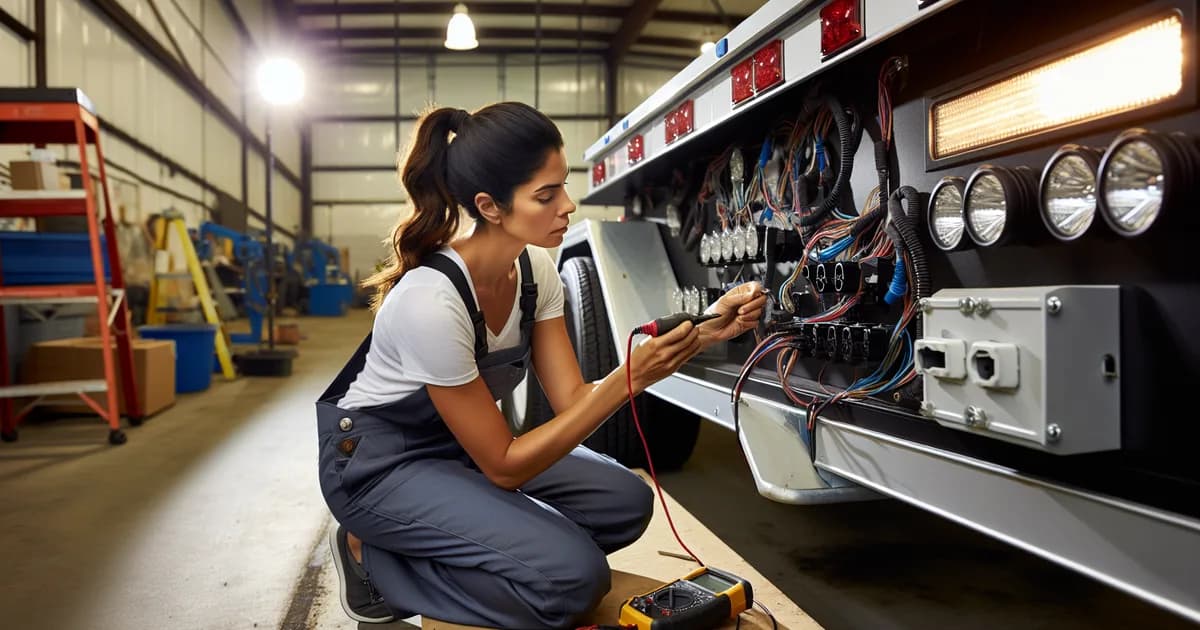
With the vehicle lights on, use your multimeter to check voltage at the trailer connector pins. You should read approximately 12V at the relevant pins when lights are activated. If you get zero volts, the problem is likely at the tow vehicle's connector or in the tow vehicle itself.
Step 4: Check for Earth Faults
Many trailer electrical problems stem from poor earth connections. Use your multimeter to test continuity between the earth pin and the trailer chassis. A good earth should show near-zero resistance. If resistance is high, clean the earth connection thoroughly.
Step 5: Test Individual Lights
Disconnect the trailer and test each light individually using your multimeter or test light. Connect positive to the light's positive wire and negative to chassis earth. If the light doesn't illuminate, the globe or internal wiring is faulty.
Common Faults and Solutions
Intermittent Lights: Usually caused by corroded connections. Clean all connectors with electrical contact cleaner and consider upgrading to a sealed connector system.
One Side Not Working: Check that side's wiring separately. Often indicates a broken wire or blown globe on that circuit.
All Lights Out: Test for voltage at the main connector first. No voltage suggests a tow vehicle issue. Low voltage indicates a poor earth connection.
Brake Lights Only: On brake-equipped trailers, test the brake light circuit separately. May indicate a faulty brake switch or broken wire in the brake circuit.
Prevention Tips for Australian Conditions
Australia's harsh climate accelerates electrical corrosion. To maintain your trailer's wiring:
- Use marine-grade connectors with sealed, waterproof designs
- Apply dielectric grease to all connections annually
- Regularly inspect wiring, especially after exposure to salt water or heavy rain
- Consider upgrading old connectors to modern sealed versions
- Store your trailer in a covered area when possible
When to Call a Professional
If you've worked through these steps and haven't identified the issue, or if you're uncomfortable working with electrical systems, contact a professional trailer repair specialist. They have diagnostic equipment and expertise to resolve complex faults quickly.
Proper maintenance and understanding your trailer's wiring system will keep you safe, legal, and trouble-free on Australian roads.